Trip info
-
Min 2 Max 12
-
Grade: Moderate
-
Mar–May, Sept–Nov
-
Max. 3,709m / 12,168ft
-
Duration: 19 Days
-
Private Vehicle
-
Hotel/ Teahouse/ Tent
-
All meals are included
<strong>Who we are</strong> Our website address is: <a href="http://www.alpinetrav.com" target="_new" rel="noopener">http://www.alpinetrav.com</a>. <hr /> <strong>What personal data we collect and why we collect it</strong> <h3>Plugin Data Collection and Compliance</h3> This website uses plugins that may store personal information. These plugins comply with GDPR regulations and are designed to manage and protect your data securely. Below are details on what data may be collected and why: <ol> <li><strong>Contact Forms</strong> <ul> <li>When you use contact forms, the plugin may collect your name, email, and other necessary details to provide responses to your inquiries.</li> <li>This data is stored to enable us to respond to your messages effectively and is retained only as long as necessary for communication.</li> </ul> </li> <li><strong>Comments and Spam Detection</strong> <ul> <li>Comments on the site collect data shown in the form, as well as the visitor’s IP address and browser user agent string to assist in spam detection.</li> <li>This data may also be shared with an automated spam detection service.</li> </ul> </li> <li><strong>Cookies and Data Storage</strong> <ul> <li>Some plugins may set cookies to improve user experience, such as storing login information or remembering preferences. These cookies comply with GDPR standards and expire after a set period or upon logging out.</li> <li>Cookies specifically used by these plugins do not collect personal data unless explicitly mentioned.</li> </ul> </li> <li><strong>Embedded Content</strong> <ul> <li>Embedded content from third-party websites may behave as if the visitor has visited those external websites. These third-party sites might collect data and track your interaction as per their policies.</li> </ul> </li> <li><strong>Analytics</strong> <ul> <li>Some plugins may collect anonymous analytics to improve site performance. However, no personal information is stored unless explicitly noted, and all data complies with GDPR standards.</li> </ul> </li> </ol> <h3>How Long We Retain Your Data</h3> The collected data is stored only as long as necessary for the intended purposes, such as for communication or to improve the site experience. This may vary based on the plugin and specific regulatory requirements. <h3>What Rights You Have Over Your Data</h3> Under GDPR, you have the right to: <ul> <li>Access: Request a copy of the personal data we hold.</li> <li>Rectification: Correct any data we hold about you that is incorrect.</li> <li>Erasure: Request the deletion of your data, provided it is no longer necessary for regulatory or operational purposes.</li> </ul> For requests, please contact us using the information in our Contact section below. <hr /> <strong>Where We Send Your Data</strong> Visitor comments may be checked through an automated spam detection service. Some plugins may also send anonymized data to third parties as part of analytics or performance monitoring. <strong>How We Protect Your Data</strong> All data managed by this website and its plugins is stored securely. We ensure our plugins meet industry standards for encryption and data protection. We also regularly update our website to prevent unauthorized access.
Tsum Valley Trek Highlights
- Enjoy the stunning Tsum Valley that showcases diverse landscapes of forests, valleys, and rivers.
- Get the chance to witness majestic views of the 8th-highest Mt. Manaslu.
- Walk through a remote conservation area with unique and endangered species of wildlife.
- Get the chance to stroll and reach Milarepa’s meditation cave.
- Celebrate unique and special festivals like Lhosar, Dashain, Tihar, etc.
- Experience the ancient Tibetan culture, traditions, and festivals.
- Visit sacred monasteries, including Rachen and Mu Gompa, to learn more about their ancient traditions.
The Tsum Valley Trek provides a special trekking experience at the foot of Manaslu. You can visit the secret Tsum Valley and its isolated villages. The trek is north of Gorkha and follows the Budhi Gandaki River and colourful rhododendron forests to the hot springs of Tatopani.
Manaslu means “spirit Mountain,” for the local Tsumbas, it is a holy deity. Please note: the locals in Tsum Valley do not allow animal sacrifice. Once restricted, trekking in Tsum Valley was opened for foreigners only in 1992 and is still under the control of the area. According to the locals, settlements were established by Guru Rinpoche in sacred beyuls or valleys of the Himalayas.
Including Tsum during the 8th century. So, these settlements provided much-needed refuge to Tibetans who fled during times of war to avoid famine and drought. Tsum is one of the best preserved valleys so far, and Polyandry is still prevalent in the villages of Tsum Valley.
This is a moderately strenuous trek that progresses through the route at low altitude, reaching maximum height at Rachen Gompa (3240m). Spring (March to May) and Autumn (September to November) are the best seasons for the Tsum Valley Trek.
Trip Facts:
- The Tsum Valley, a pilgrimage site for Himalayan Buddhists, was closed to trekkers until 2008.
- Tsum Valley trek allows visitors to enjoy a culturally unique trip, with a Tibetan-influenced lifestyle and ancient monasteries.
- The Tsum Valley is in the northern Gorkha district of Nepal, part of the Manaslu Conservation Area.
- Trekkers on this journey will appreciate the magnificent panoramic views of mountain ranges, including Manaslu, Ganesh Himal, and Himalchuli.
- Along the trek, ancient monasteries like Mu Gompa and Rachen Gompa provide spiritual elements.
- The Tsumba people who live in the valley have cultural traditions and dialects that differ from the larger groups in Nepal and Tibet.
- This trek generally allows one to experience remote, unspoiled, beautiful Himalayan scenes.
- The trek will reach a maximum altitude of around 3700 meters (12,140 feet) at Mu Gompa.
Customize Your Tsum Valley Trek:
- This is a general itinerary, which can always individually be “tailormade”. The Tsum Valley trek package can be redesigned or redeveloped as per your taste, For more information please contact us.
19-Days Tusum Valley Trek Itinerary
We recommend that you schedule your arrival in Kathmandu in the morning or afternoon. This will give you enough time to relax and recover from jet lag before starting your adventure. Upon arrival at Kathmandu International Airport, our representative will meet you at the airport and transfer you to your hotel where you will be served welcome drinks. After you have freshened up, your trek guide will brief you about your trip in the lobby of your hotel in the evening.
Get familiar with your surroundings by taking a walk down the street. Visit to Thamel, the main tourist hub. Overnight at Kathmandu's in a Hotel.
Accommodation: Hotel Moonlight
In the morning, you visit two UNESCO World Heritage Sites, Boudhanath and Pashupatinath, as part of a guided sightseeing tour. The tour lasts approximately 3 to 4 hours. In the afternoon, you will be briefed about your upcoming adventure. If you have any doubts, check your equipment and visit the Swayambhunath Monkey Temple near your hotel. Spend the night in Kathmandu.
Accommodation: Hotel Moonlight
Meals: Breakfast
A 7-8 hour’s drive from Kathmandu into the western mountains takes you to Arughat via Dhadingbesi, headquarter of the Dhading district. Through the dirt road from Dhadingbesi viewing the greenery hills you'll reach Arughat, your trek start point. Arughat is a major town in the region and is divided in two parts with the Budhi Gandaki river flowing between them. Overnight at Arughat.
Accommodation: Fully camping
Meals: Breakfast, Lunch and Dinner
Today you'll cross the bridge over Budhi Gandaki and begin your trek from the western part of Arughat., you'll follow the stone-paved street north through the bazaar. You will pass through the hydro- electric power plant, fields of rice and millet to Mangaltar, and through forests you will arrive at Shanti Bazar. The trail to Budhi Gandaki valley now becomes steeper and the trek more difficult as you'll cross the Arkhet Khola on a suspension bridge, passing the shops of Arkhet Bazar. Descend to a high, cascading waterfall making a long steep slog up a ridge to Kuerepani. Then from here the trail descends to Soti Khola. Overnight at Soti Khola.
Accommodation: Fully camping
Meals: Breakfast, Lunch and Dinner
After breakfast you'll cross the bridge and trek through the beautiful Sal forests, then climb onto a ridge above huge rapids on the Budhi Gandaki. The rocky trail then weaves its way up and down, past two tropical waterfalls on a steep, rocky trail clinging to the side of a cliff. It eventually makes its way down and past a few rice terraces, then up and around to the Gurung village of Labubesi.
Climb behind a rocky outcrop, where the valley opens and the Budhi Gandaki meanders among wide gravel bars. Drop to the sandy river bed and walk along rounded stones before climbing over a side ridge. Head down again to the river and traverse to Machha Khola village. Overnight at Machha Khola.
Accommodation: Fully camping
Meals: Breakfast, Lunch and Dinner
Today, the narrow trail makes some minor ups and downs and eventually crosses the Tharo Khola, flowing in a rocky ravine, then reaches Khorlabesi. After a few more ups and downs there is a small trailside hotspring, from where you'll reach to Tatopani. From the Hot spring you will climb over another ridge, then cross the Budhi Gandaki on a suspension bridge. Climb on a wide, well-crafted staircase, then across a landslide and over a ridge to Dobhan. Crossing a suspension bridge over the Dobhan Khola, the trail climbs on a rugged trail to Duman. Ascending up again to the Budhi Gandaki, you'll reach at Yaru Khola. Crossing a suspension bridge over the Yaru Khola you'll climb the stone stairs and then drop to the river and again climb more stone stairs to Tharo Bharyang. Cross to the west bank of the budhi gandaki, climb over a ridge, and trek along the river then climb towards the village of Jagat.
Accommodation: Fully camping
Meals: Breakfast, Lunch and Dinner
After breakfast, you'll completing with the ACAP procedure, you will climb over a rocky ridge to Salleri, and then descend to Sirdibas. The valley widens a bit as the trail continues up to Ghatta Khola. Continue upstream to a long simple hanging bridge. Climb up to Philim, a large gurung village. Philim valley is well known for Japanese made school and police station. Walk past Philim to the north across a forest with the views of the narrowing valley you'll reach Chisopani. Overnight at Chisopani.
Accommodation: Fully camping
Meals: Breakfast, Lunch and Dinner
After Ekle Bhatti cross the gorge and half an hour walk in the right side you get to see the big and beautiful waterfall and enter the pine tree forests. Then descend down to trail going to the Tsum Valley.
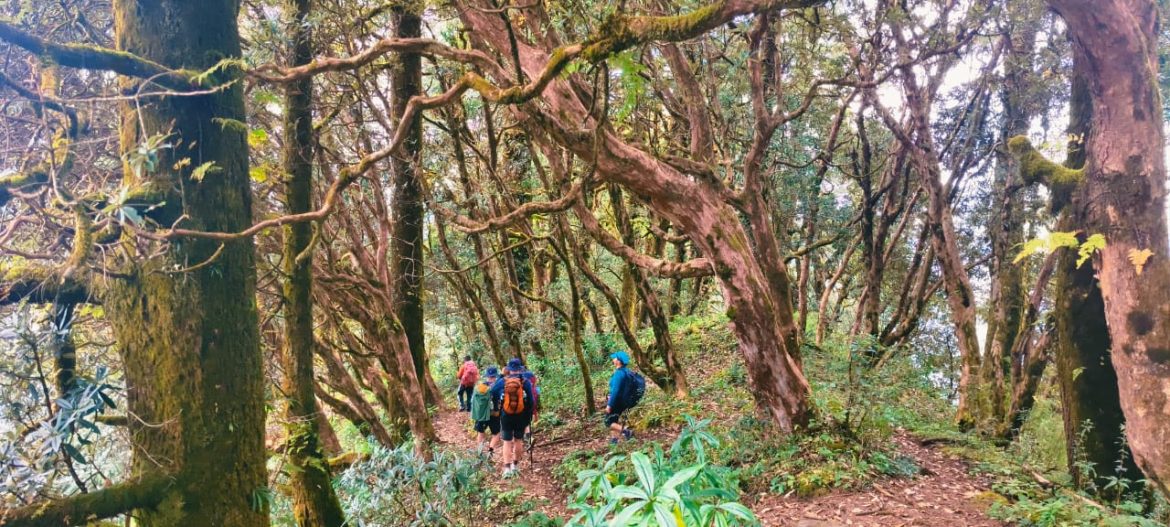
Climb through pine and rhododendron forests. Enjoy the views of Himalchuli mountains at 7893m and Boudha Himal from Lokpa, a small beautiful village.
Pass Lokpa, descend half an hour towards Lungwa khola and climbing jick jack difficult trail further two hours north through pines and rhododendrons you'll reach Gumlung. Crossing the Siyar Khola, finally arrive at Chumling, from where you can view Shringi Himal. Visit the old Chumling gompa, and the stone streets of the village.
Accommodation: Fully camping
Meals: Breakfast, Lunch and Dinner
After breakfast, today you'll cross the suspension bridge onto the opposite bank. Enjoy the great views of Ganesh Himal. Walk past Rainjam to Serpu Khola crossing another bridge you'll arrive at the Gho Village. Another continues 2 hours climb to Tsum takes you to the village of Chhokangparo. Weather permitting; enjoy the views of Himalchuli at 7893 meters and Ganesh Himal at7140m. Overnight at Chokhangparo.
Accommodation: Fully camping
Meals: Breakfast, Lunch and Dinner
Today, while climbing above Chokhangparo, better to be careful of altitude problems. Walk past Lamagaon crossing rope suspension bridge to the Rachen Gompa, which is also well known as Nunnery Gompa too. You will make a small visit and then you'll cross the Shiar Khola. Continue walking through the well managed villages Lar (micro hydro power), Phurbe and Pangdun. Leaving old historic Stupa of Bhudda in a way crossing the village of Chhule, climb upstream and cross the bridge to finally arrive at Nile. If you consider you can make your visit to a famous monastery of Chhule which is located in the top of area.
Accommodation: Fully camping
Meals: Breakfast, Lunch and Dinner
After breakfast, you are now almost close to the Tibetan border. Walk to the west bank of the valley through the Tibetan landscapes. Climb up to the Mu Gompa. You will also visit the monastery. Then after, you make a visit to the Dhephu Doma Gompa.
Accommodation: Fully camping
Meals: Breakfast, Lunch and Dinner
Today you'll make a sightseeing of the whole Mu Gompa Region. Mu Gompa is the largest monastery in the region. The Gompa lies at the highest and most remote part of the Tsum Valley. After exploring the Mu Gompa area, you may also consider the option of getting to the base of Pika Himal (4865m).
Accommodation: Fully tented camping
Meals: Breakfast, Lunch and Dinner
Today trek back through Chhule and Phurbe, on the east bank of the Shiar Khola. Finally you'll arrive at Burgi village. The Burgi village is a small beautiful village. Then climb up to the Milarepa’s Cave Milarepa Cave (piren phu) is known for its mesmerizing glimpses of Poshyop Glacier, Kipu Himal and Churke himal.
Accommodation: Fully camping
Meals: Breakfast, Lunch and Dinner
After breakfast, you'll continue trekking watching the greenery of nature and descend down to Chhokang Paro again. From their continue descending to Gho. Descending further, you'll arrive at the bridge over the Sarpu Khola. Trekking along the lower Tsum Valley takes you to again Chumling.
Accommodation: Fully camping
Meals: Breakfast, Lunch and Dinner
Today the trail continues to Lokpa. After lunch south on a flat trail you move ahead. Enjoy the gorgeous Samba Falls. Finally arrive at Philim after 6 or 7 hours long trekking. A trail passes through the Phillim village that leads to the Ganesh Himal Base Camp.
Accommodation: Fully camping
Meals: Breakfast, Lunch and Dinner
The trek starts today from Philim to Khorlabesi via Jagat and Tatopani. Descend down to Sirdibas and finally reach to Jagat. Further descend takes you to Yaruphant. The arid Tibetan climate now gives way to subtropical green vegetation. the you'll continue trekking to Dobhan. Finally arrive at Tatopani. There is a hot spring at Tatopani. If interested, you may dip yourself in the hot spring and relax your tired muscles by soaking yourself in the hot spring. If not continue walking up and down from Tatopani to reach Khorlabesi, your rest place for the day.
Accommodation: Fully camping
Meals: Breakfast, Lunch and Dinner
The trail crosses the Tharo Khola flowing in a rocky ravine. Head down again to the river and traverse to Machha Khola village. Walk along the Budhi Gandaki River to reach to Gurung village of Labubesi. Pass the two waterfalls on a steep rocky trail on the side of a cliff. You will then reach Khursane. Walk along the ridge above Budhi Gandaki and cross the Sal forests. You'll finally, cross the bridge to arrive at Soti Khola.
Accommodation: Fully camping
Meals: Breakfast, Lunch and Dinner
After breakfast, you will climb up to the ridge of Kyorpani. Descend down to the cascading waterfall. Trekking further arrive at Arkhet. Cross the Arkhet Khola. Then you are now leaving the Budhi Gandaki Valley. Arrive at Sante Bazaar; pass through the forests to Maltar.
Finally, passing by the hydroelectric plant following the stone streets, you'll arrive at the Arughat Bazar. Back to Kathmandu along the banks of the Marsyangdi and Trishuli rivers with splendid views of green hills, mountains, farming terraces and villages on both sides of the road.
To celebrate the successful completion of your journey, AlpineTrav Treks will have a farewell dinner in the evening. Stay overnight in Kathmandu.
Accommodation: Hotel Moonlight
Meals: Breakfast, Lunch
Thank you for joining us on this trek and it has been a pleasure getting to know you during this time. We hope this venture has enriched your experience with happy memories. You will be assisted in your last minute preparation. Our representative will take you to Tribhuvan International Airport three hours before your scheduled flight. Bon voyage for a safe and pleasant trip home. Safe Journey!! We hope to see you again.
Meals: Breakfast
Tsum Valley Trek 19-Days Cost Details
Cost Includes
- On the trekking route: Full camping setup (kitchen tent, dining tent, toilet tent, table, chairs, and more for your comfort.
- Twin-share accommodation at 3 star Hotel in Kathmandu for 3 nights
- All guide, cook, Sherpa, and porter expenses, including meals, transportation, tent camping accommodations.
- All private ground transportation including airport transfers
- Freshly prepared meals (B, L, D) with boiled water, tea, coffee etc.
- Twin sharing tent for accommodation during the trek.
- Experienced local trek guide with 1:4 assistant guide to client ratio
- Full support camping crew with number of porters to carry load equipment.
- All camping logistical arrangements for your comfort
- Tsum Valley Permit and the Manaslu Restricted Area Permit (RAP).
- Duffle bag for porter use (1 duffel bag per trekker)
- Comprehensive first aid kit with high altitude medicine
- Trekking Area Map, and Water Purifications Tablet
- Staffs salary, food, equipment, and insurance, included on-trip cost
- Official expense, all local and government tax and VAT.
- Sleeping bag if needed (it is refundable)
- Farewell celebratory dinner in Kathmandu with trek team
Cost Excludes
- International flight tickets and Nepal entry visa fee
- Lunch and Dinner in Kathmandu, Pokhara during stay
- Disembarkation Airport Tax in Nepal - approx. US$ 24. al equipment
- Personal hiking equipment
- Personal expenses. Additional expenses due to unforeseen circumstances such as other events beyond control.
- Drinks except tea and coffee. (Bar Bill, laundry and telephone calls.)
- Travel Insurance: Liability of insurance against any kind of medical expenses etc.)
- Emergency rescue evacuation if needed
- Tips for treks guide and porter (it is appreciated)
19-Days Trip Cost Details
- The trip cost always depends on group size, hotel accommodation category and client’s desire budget
- The included itinerary is a guideline and standard pattern which AlpineTrav you. This trip itinerary can be modified according to your time and requirements
- The itinerary shall be changed after an understanding between both AlpineTrav and the client. Additional activities could be either added or reduced as per client’s request before the trip confirmation
- Price shall be adjusted in our mutual understanding, if the client intends to add some services we shall charge him/ her for those additional services and if he/she intends to lessen some services, we shall wave the charges accordingly
- The Tsum Valley Trek itinerary has been published in 3-star hotel and tea house/lodge services for better understanding of the customers.
Please contact us on WhatsApp: +9779860751012 for any information about in your selected package.
Useful Info
Please take care to note: Every effort will be made to keep to the above itinerary; however, since this adventure entails traveling in remote mountainous regions, we cannot guarantee that we will not deviate from it. Weather, the health condition of a group member, unexpected natural disasters, etc., can all contribute to changes in the itinerary. The trek guide will try to ensure that the trip runs according to plan, but please be prepared to be flexible if required.
Food and accommodation facilities on the Tusum Valley route
The Tsum Valley Trek, a hidden gem in Nepal, offers basic but comfortable food and accommodation options, primarily in teahouses and homestays.
Along the trail, trekkers can find small family-run lodges that provide simple, hearty meals, including traditional Nepali dishes like dal bhat (rice with lentils and vegetables), thukpa (noodle soup), and tsampa (roasted barley flour). Western dishes such as pasta, pancakes, and fried rice are also available, though choices become more limited as you ascend into higher and more remote areas.
Meals are prepared with locally sourced ingredients, ensuring freshness, but trekkers should be prepared for a repetitive menu in the more isolated villages.
Accommodation in the Tsum Valley is rustic yet cozy, with most teahouses offering shared rooms with twin beds and basic bedding. While electricity is available in lower regions, higher-altitude lodges may rely on solar power or candles, and heating is usually limited to a communal dining area with a wood stove.
Toilets are mostly shared and may be either Western-style or squat, with hot showers becoming a rarity as you go higher. Despite the simplicity, the warm hospitality of the local Tibetan and Nepali hosts makes the stay memorable, with many teahouses providing blankets and hot water bottles to combat the cold nights.
Due to the valley’s remoteness, it’s advisable to carry some snacks, energy bars, and a reusable water bottle (with purification tablets) for convenience. While major villages like Chhekampar and Nile have better facilities, smaller settlements offer only the most basic amenities.
Booking ahead isn’t usually necessary, except during peak seasons (spring and autumn), but trekkers should be flexible and prepared for occasional shortages. Overall, the Tsum Valley Trek balances adventure with cultural immersion, offering an authentic Himalayan experience with modest yet sufficient food and lodging.
Where are the starting and ending points of the Tussum Valley Trek?
The trekking routes of Tsum Valley can have variations, and descriptions can differ slightly. However, here’s a general overview of the Tsum Valley Trek’s starting and ending points: The Tsum Valley Trek typically begins with a drive from Kathmandu to Arughat or sometimes directly to Machha Khola. Arughat is often considered the initial access point to the region.
From Arughat, the trek gradually progresses towards Machha Khola, which then becomes the starting point of the trek on foot. So, in many cases, the trek begins in Machha Khola. The trek usually concludes by retracing the route back down the valley, with Machha Khola being a common ending point. From Machha Khola, travelers typically journey back to Kathmandu, so the ending point of the foot trekking portion is often Machha Khola. It’s important to note that the itinerary can vary depending on the trekking company and the specific route chosen.
What is the weather and temperature like in Tusum Valley?
The Tsum Valley, located in the isolated northern part of Nepal, has a variety of weather patterns owing to different altitudes and the Himalayan setting. Knowing these weather conditions is useful for anyone considering trekking in this beautiful place. Weather can vary greatly throughout the year and even within distinct seasons, which makes the valley unique.
- January (Weather Conditions): Very cold, heavy snowfall possible, trails icy. Temperature Daytime: -2°C to 6°C; Nighttime: -15°C to -20°C
- February (Weather Conditions): Cold, some snowfall, clearer skies than January. Daytime: 0°C to 8°C; Nighttime: -10°C to -18°C
- March (Weather Conditions): Spring begins, warming, clear skies. Daytime: 4°C to 12°C; Nighttime: -6°C to -12°C
- April (Weather Conditions): Peak spring, ideal trekking weather, dry. Daytime: 6°C to 16°C; Nighttime: -2°C to -8°C
- May (Weather Conditions): Warmer, some pre-monsoon showers possible. Daytime: 10°C to 20°C; Nighttime: 0°C to -5°C
- June (Weather Conditions): Monsoons begin with wet, humid, and heavy rainfall. Daytime: 12°C to 22°C; Nighttime: 2°C to 8°C
- July (Weather Conditions): Monsoon, heavy rainfall, slippery trails. Daytime: 14°C to 24°C; Nighttime: 4°C to 10°C
- August (Weather Conditions): Monsoon, continued rainfall, cloudy. Daytime: 14°C to 23°C; Nighttime: 4°C to 9°C
- September (Weather Conditions): Post-monsoon, clearing skies, good visibility. Daytime: 12°C to 18°C; Nighttime: 0°C to 6°C
- October (Weather Conditions): Autumn, excellent trekking conditions, clear. Daytime: 10°C to 16°C; Nighttime: -2°C to -6°C
- November (Weather Conditions): Cooling, clear skies, colder nights. Daytime: 6°C to 12°C; Nighttime: -5°C to -10°C
- December (Weather Conditions): Cold, potential snowfall, freezing temperatures. Daytime: 0°C to 6°C; Nighttime: -10°C to -18°C
How difficult is the Tusum Valley trek?
The Tsum Valley Trek is moderately complex. Trekkers should expect to hike 6-7 hours daily, with steep climbs and descents. Some parts of the trek have sudden altitude changes, which can cause altitude sickness. You may not need previous trekking experience, but being in good physical shape and mentally ready for unexpected challenges in the Himalayas is crucial, as poor planning can lead to serious injuries.
Before your Tsum Valley Trek, prepare by exercising for at least a month. You can go to the gym, swim, hike, or cycle to build muscles and improve endurance. The highest point you will reach is Mu Gompa, at 3,700 meters. After that, you will face rugged terrain in a remote area. You will cross several chilly hanging bridges that will test your determination.
Altitude Sickness and Remedies during the Tsum Valley Trek
Altitude sickness, or Acute Mountain Sickness (AMS), occurs when the body cannot adjust to lower oxygen levels at altitude. The Tsum Valley Trek takes trekkers to altitudes above 3,500 meters at high elevations, and symptoms could include headache, nausea, dizziness, drowsiness, fatigue, and shortness of breath due to lower air pressure and oxygen saturation.
If altitude sickness worsens, it can lead to more serious and potentially lethal conditions such as High Altitude Pulmonary Edema (HAPE) and High Altitude Cerebral Edema (HACE). The risk of altitude sickness is greater if the trekker ascends more rapidly, gets dehydrated, or exerts themselves too much. Proper acclimatization is essential. The body requires time at altitude to acclimate; more specifically, it takes time to produce more red blood cells to move oxygen to the organs. A hiker can develop pulmonary or cerebral edema if they ascend to high altitude too quickly, where fluid leaks into the lungs or brain, causing pulmonary or cerebral edema.
The Tsum Valley Trek is ideal for improving health; altitude sickness symptoms in Tsum Valley can deteriorate rapidly if not attended to. Trekkers with already damaged hearts or lungs are at increased risk for developing high-altitude sickness and should discuss possible treks with their doctor first. Recognizing early-stage symptoms and acting upon them is very important in order to prevent the progression to severe altitude sickness and greater complications.
Treatment of altitude sickness: For Altitude sickness, fortunately, several remedies—including gradual acclimatization, hydration, medications, and natural treatments—can help prevent and alleviate symptoms, ensuring a safer and more enjoyable high-altitude experience. So let’s get into them.
Gradual Ascent and Acclimatization: One of the most effective ways to prevent altitude sickness is to ascend slowly, allowing the body time to adapt. During the Tsum Valley Trek, follow the “climb high, sleep low” principle—hike to higher elevations during the day but descend slightly to sleep. Schedule rest days at key points, such as in Mu Gompa (3,700m) or Nile (3,361m), to help your body adjust. Rushing the ascent significantly increases the risk of AMS, so a well-paced itinerary is essential for safety.
Stay Hydrated: Dehydration worsens altitude sickness symptoms, so drinking plenty of fluids is crucial. Aim for 3-4 liters of water daily, as dry mountain air and physical exertion increase fluid loss. Avoid alcohol and caffeine, as they contribute to dehydration. Electrolyte solutions or oral rehydration salts can help maintain balance. Clear or light-colored urine indicates proper hydration, while dark urine suggests drinking more water.
Medication (Diamox/Acetazolamide): Diamox (Acetazolamide) is a commonly prescribed medication that helps prevent and reduce AMS symptoms by speeding up acclimatization. It works by increasing breathing rate, thus improving oxygen intake. Doctors recommend starting Diamox a day before ascending and continuing for the first 48 hours at high altitude. However, it may cause side effects like tingling fingers or frequent urination, so consult a physician before use. Ibuprofen or paracetamol can also help relieve headaches
Eat a High-Calorie, Carbohydrate-Rich Diet: During high exertion or at high altitude, your body will hyperburn energy and deplete its nutrients with high efficiency. It is important to eat well. Focus on higher carbohydrate foods like rice, pasta, and potatoes, which are generally easier to digest as they provide energy quicker than proteins or fats. More frequent, small meals help sustain energy without creating digestive overload. Heavy, fatty foods will slow the body’s metabolism and ultimately help you burn energy more slowly. Garlic soup is a time-honoured Himalayan recommendation. A component of garlic soup has a reputation for aiding in blood circulation and oxygen absorption.
Descend if Symptoms Worsen: If symptoms of altitude sickness become severe (such as confusion, extreme fatigue, or difficulty breathing), the only effective treatment is immediate descent. Delaying can lead to life-threatening conditions like HAPE or HACE. Carry a portable oxygen cylinder or use a Gamow bag (hyperbaric chamber) in emergencies if descent isn’t immediately possible. Never ignore worsening symptoms—prioritize health over reaching the next destination. Proper preparation and awareness can make the Tsum Valley Trek a safe and rewarding experience.
Location and History of Tsum Valley
The Tsum Valley, located in the Gorkha district of western Nepal, is at an elevation ranging from 2,000 to 3,500 meters (6,600 to 11,500 feet). This region is encompassed within the Manaslu Conservation Area, which was established in 1998. The valley comprises 33 villages, housing 529 households with a population of 1,810 individuals.
The lower portion of the valley is characterized by steep terrain and a lower density of settlements. The indigenous inhabitants of the Tsum Valley are known as the Tsumba people, who practice both Bon and Buddhism. To preserve the local traditions associated with Bon and Buddhism, the Government of Nepal has designated the Tsum Valley as a restricted area for foreign visitors.
The Tsum Valley was an important trade route between Nepal and Tibet and was completely cut off from the outside world until the beginning of the early 2000s. The valley exhibits aspects of Tibetan Buddhist culture in the form of ancient monasteries, chortens, and mani walls, which indicate its spiritual importance.
Locally, there are stories of the great Buddhist saint Milarepa meditating in the caves of Tsum. In 2008, the valley opened to trekkers, but it continues to preserve much of its traditional lifestyle. Local people use a cooperative system called Shyakya, which is a community and unique governance structure.
What attracts the Trekkers to explore the Tsum Valley?
The Tsum Valley is a unique combination of unblemished wilderness and untouched culture. Most regions in Nepal share these qualities. However, the Tsum Valley is unlike almost any trekking region due to its remote location and beautiful surroundings.
The trekking experience in the Tsum Valley is site-specific, which is undoubtedly heightened by the astounding beauty of the cascading waterfalls, deep valleys, incredible rivers of drinking water flowing loudly beside you, and the rare opportunity to trek with towering Himalayan peaks in the background, specifically the Ganesh Himal and Manaslu.
While visitors can witness breathtaking scenery, the Tsum Valley is about being immersed in a traditional Tibetan Buddhist culture. Known as Tsumbas, the valley’s population lives differently than most of us. Scattered throughout the valley are ancient monasteries, mani walls, and typical chortens. Additionally, the valley is marked by a prominent adherence to non-violence, and its sacred architecture makes for a tranquil atmosphere.
Moreover, the prospect of observing interesting traditions and friendly local people can make the Tsum Valley a very spiritually and culturally pleasing destination for trekkers. Being an adventure travel destination does not detract from the experience of trekking in the Tsum Valley as a cultural experience.
Permits and Preparation for the Tsum Valley Trek
The Tsum Valley is a remote, beautiful, culturally rich region in Nepal with a strong Tibetan influence. Because of its unique cultural and ecological value, the Nepalese government restricts access to the valley, requiring trekkers to obtain special permits.
To trek in the Tsum Valley, you need two specific permits: the Tsum Valley Permit and the Manaslu Restricted Area Permit (RAP). The Manaslu RAP is more costly, priced at USD 100 per week for the first four weeks, and then it increases to USD 15 per day for any trekking beyond that period, depending on the season. The Tsum Valley Permit, on the other hand, is more affordable at just USD 40 per week.
These permits can be acquired in Kathmandu through authorized trekking agencies, or directly from the Department of Immigration or the Nepal Tourism Board (NTB).
It’s essential to arrange these permits beforehand, as regulations are strictly enforced to preserve the area’s natural environment and cultural integrity.
FAQs About Tsum Valley Trek
Yes, it is absolutely typical for trekkers to supplement the Tsum Valley trek with the Manaslu Circuit Trek, creating an elongated and very fulfilling experience in the Himalayas. The combination allows trekkers to experience the variety of terrain, landscapes, and cultures of the Manaslu region, including the distinct Tibetan-influenced culture of the remote Tsum Valley.
The trek to Tsum Valley typically takes 18 to 20 days. Some trekkers combine Manaslu and Tsum Valley to extend the trek to more than 20 days. Hence, Tsum Valley is considered one of the longest treks in Nepal, so trekkers must be prepared accordingly.
The highest altitude reached during the Tsum Valley Trek is approximately 3,700 meters (12,139 feet) at Mu Gompa. It’s crucial to acclimatize properly to avoid altitude sickness, as the trek involves significant elevation gain. Acclimatization days built into the itinerary are very important.
The Tsum Valley Trek offers several high-altitude vantage points that showcase breathtaking Himalayan panoramas. Notably, locations like Mu Gompa, approximately 3,700 meters, provide stunning views of surrounding peaks such as Manaslu, Boudha Himal, Ganesh Himal, and Himalchuli. From these vantage points, you will see impressive peaks like Bauda Himal, Ganesh Himal Base Camp, etc.
The Tsum Valley Trek can be quite challenging but ultimately rewarding. It is widely regarded as one of the hardest treks in Nepal. This trek leads you to a remote community in the Himalayas bordering Tibet (China). The terrain is full of high passes and steep sections that make it difficult for both inexperienced and experienced trekkers.
Yes, hiring a guide is generally necessary for the Upper Tsum Valley Trek due to it being a restricted trekking area requiring permits, and guides are often mandated for those permits. Additionally, guides provide essential navigation, safety, and cultural insights, while porters are strongly recommended to ease the physical demands of the trek.
The Tsum Valley Trek is a unique experience found in the “Hidden Valley” within the Manaslu region of Nepal. It provides an opportunity to see a remote area with Tibetan-influenced culture, ancient monasteries, and stunning Himalayan scenery, essentially leading you beyond the Tsum Valley to the “Hidden Valley.”
There are major limitations to bringing children on the Manaslu Tsum Valley Trek, given that it’s such a remote area, at high altitude, and has difficult terrain. It’s not an impossible task, but it takes lots of planning and thought. Just consider the children’s ages, their fitness levels, and how well they do at high altitude.
The “Shagya” tradition is a local practice of nonviolence that prohibits the killing or harming of living beings. This practice reflects the strong Buddhist beliefs of the Tsumba people and contributes to the valley’s peaceful atmosphere. Hence, animal sacrifice is not practiced in the temples of Tsum Valley.
The following information will give you some ideas on what to bring for a hike. It is important not to forget the essential items, as this will determine your comfort and safety on the hike. Equally important is that you do not burden yourself with unnecessary equipment on the hike. That is why we have listed some below.
General
- All season sleeping bag and down Jacket
- Duffle bag
- A wind and waterproof thin layered jacket
- Daypack
Upper Body- Head / Ears / Eyewear
- A pair of half gloves
- A warmer hat that covers the ears
- Sunglasses
- Neckwarmer
- Sunscreen (35 to 60 SPF)
- Headlamp and an extra set of batteries
Hands
- A pair of half gloves for walking poles(if you prefer)
- Warmer shell gloves and liner
Upper Body
- long sleeve t-shirts
- Thermal tops
- wool jacket or pullover
- Sports bras for women and girls
- Water and windproof shell jacket
Lower Body
- Thermal underwear (especially trousers)
- windproof and waterproof trousers
- warmer trousers
- Comfortable trekking pants
- Extra casual sport pants
Footwear
- A pair of good waterproof trekking boots
- Pair of sandals
- 4-5 pairs of woolen socks
- Sock liners
- Light shoes and sneakers
- First Aid Kits and Medicines
- Assorted adhesive bandages (fabric preferred)
- Blister treatment cream or similar
- Insect / anti-itch ointment
- Ibuprofen or other pain-relief medication
- Diamox (125mg to 250mg tablets for altitude sickness)
- Warps, splints, and wound coverings butterfly bandage
- Water purifying pills
(Note that our guide will carry medicine and first aid kit during the trek. However, we recommend that you bring your own personal first aid kit as well)
Miscellaneous – but must useful on the trek
- 4 passport size photos with original passport
- Water bottle & filter
- Flight details
- Bathroom kit (conform, should be included toilet paper, plastic bags, hand wipes, towel, and soap, etc.)
Extra things
- Comfortable trekking poles
- Quality energy dry foods (up to you)
- Power bank and music players
- Camera (memory card, chargers, and extra batteries)
 Nepal
Nepal