

Trip info
-
Min 1 Max 12
-
Grade: Challenging
-
March-May, Sept-Nov
-
Max. 5,364m/17,559ft
-
Duration: 14 Days
-
Private Vehicle/ Flights
-
Hotel & Teahouse/ Lodge
-
All meals are included
<strong>Who we are</strong> Our website address is: <a href="http://www.alpinetrav.com" target="_new" rel="noopener">http://www.alpinetrav.com</a>. <hr /> <strong>What personal data we collect and why we collect it</strong> <h3>Plugin Data Collection and Compliance</h3> This website uses plugins that may store personal information. These plugins comply with GDPR regulations and are designed to manage and protect your data securely. Below are details on what data may be collected and why: <ol> <li><strong>Contact Forms</strong> <ul> <li>When you use contact forms, the plugin may collect your name, email, and other necessary details to provide responses to your inquiries.</li> <li>This data is stored to enable us to respond to your messages effectively and is retained only as long as necessary for communication.</li> </ul> </li> <li><strong>Comments and Spam Detection</strong> <ul> <li>Comments on the site collect data shown in the form, as well as the visitor’s IP address and browser user agent string to assist in spam detection.</li> <li>This data may also be shared with an automated spam detection service.</li> </ul> </li> <li><strong>Cookies and Data Storage</strong> <ul> <li>Some plugins may set cookies to improve user experience, such as storing login information or remembering preferences. These cookies comply with GDPR standards and expire after a set period or upon logging out.</li> <li>Cookies specifically used by these plugins do not collect personal data unless explicitly mentioned.</li> </ul> </li> <li><strong>Embedded Content</strong> <ul> <li>Embedded content from third-party websites may behave as if the visitor has visited those external websites. These third-party sites might collect data and track your interaction as per their policies.</li> </ul> </li> <li><strong>Analytics</strong> <ul> <li>Some plugins may collect anonymous analytics to improve site performance. However, no personal information is stored unless explicitly noted, and all data complies with GDPR standards.</li> </ul> </li> </ol> <h3>How Long We Retain Your Data</h3> The collected data is stored only as long as necessary for the intended purposes, such as for communication or to improve the site experience. This may vary based on the plugin and specific regulatory requirements. <h3>What Rights You Have Over Your Data</h3> Under GDPR, you have the right to: <ul> <li>Access: Request a copy of the personal data we hold.</li> <li>Rectification: Correct any data we hold about you that is incorrect.</li> <li>Erasure: Request the deletion of your data, provided it is no longer necessary for regulatory or operational purposes.</li> </ul> For requests, please contact us using the information in our Contact section below. <hr /> <strong>Where We Send Your Data</strong> Visitor comments may be checked through an automated spam detection service. Some plugins may also send anonymized data to third parties as part of analytics or performance monitoring. <strong>How We Protect Your Data</strong> All data managed by this website and its plugins is stored securely. We ensure our plugins meet industry standards for encryption and data protection. We also regularly update our website to prevent unauthorized access.
Key features of the must-see Everest Base Camp trek
- Trek to the iconic Everest base camp & finest viewpoint, Kalapathar, within 14 days.
- Exciting flight to Tenzing Hillary Airport with an aerial view of the Himalayas.
- Walk through the varied landscape of Sagarmatha National Park and experience the wilderness.
- Pass through the Sherpa villages of Namche Bazaar, Tengboche, and Dingoche and interact with locals.
- Explore the iconic Buddhist monastery, Tencboche, and be involved in morning prayer.
- Walk over the world’s highest glacier, the Khumbu Glacier.
- Cross the thrilling suspension bridges over the Dudh Koshi River.
- Witness breathtaking views of numerous majestic peaks, including Mount Everest, Lhotse, and Ama Dablam.
The Everest Base Camp Trek 14 Days is a popular alternative for people who have limited time and want to trek to the famous Mt. Everest base camp safely and without rush. The package lets you immerse yourself in the full Everest experience and get close to the highest mountains in the world in just 14 days. Likewise, the trek follows proper acclimatization and a well-paced itinerary to provide comfort and safety.
Many people have Everest base camp on their bucket lists. Whether they want to enjoy the breathtaking landscapes, savor the iconic history, or simply say, ‘I was there,’ it remains one of the great objectives for walking enthusiasts. Our expert team specially devises the 14-day Everest Base Camp trek with years of experience in this adventure field. Altitude, acclimatization, good campsites, and trails are the main factors considered when designing the itinerary, keeping in mind that our clients will enjoy the trek from beginning to end.
This trip follows the same approach as the standard All-inclusive Everest base camp trek. Your trek starts from Kathmandu with a scenic mountain flight to Lukla, and the real trek begins from Lukla, following the Dudh Koshi River. Additionally, AlpineTrav Treks & Expeditions provides a high staff-to-client ratio, ensuring safety first and efficiently catering to the participants’ needs.
Why is a 14-day trek suitable for you?
Iconic Adventure – The Everest Base Camp Trek is an iconic adventure in Nepal that is on the bucket list of adventure seekers worldwide. As the trek provides a chance to stand at the foot of Mount Everest, it is a highly sought-after trekking destination. Thus, with a mixture of a sense of accomplishment and challenge, the trek suits those who want to challenge themselves and want to experience how it feels to stand at 5,364 meters above sea level.
Acclimatization Plan – Our experts have carefully planned this 14-day Everest Base Camp trek itinerary, adding careful acclimatization days. Acclimatization is crucial while trekking as it helps to adapt to the changed temperature of the surroundings. Thus, the journey is ideal for those unable to adjust to sudden changes in temperature fast, allowing them to take plenty of time to adjust to the changed temperature.
Challenging yet Rewarding – Indeed, reaching the base of the world’s highest peak is not easy and comes with some challenges. However, each challenge on the trek to EBC is worth it after reaching the ultimate destination. Therefore, the 14-day EBC trek is perfect for those seeking a challenging yet rewarding journey.
Short Journey – Compared to other trekking destinations’ itineraries for the Everest region, EBC’s 14-day itinerary is quite short and rewarding. Within two weeks, trekkers can experience the most of the Himalayas’ lifestyle and majesty. Hence, the trek is suitable for those who have limited time but want to experience the thrill of hiking in a world-renowned trekking destination.
Customize Your Everest Base Camp Trek:
- This is a general itinerary, which can always individually be “tailormade”. The Everest Base Camp trek package can be redesigned or redeveloped as per your taste, For more information please contact us.
14-Day Everest Base Camp Trek Itinerary
We recommend that you schedule your arrival in Kathmandu in the morning or afternoon. This will give you enough time to relax and recover from jet lag before starting your adventure. Upon arrival at Kathmandu International Airport, our representative will meet you at the airport and transfer you to your hotel where you will be served welcome drinks. After you have freshened up, your trek guide will brief you about your trip in the lobby of your hotel in the evening.
Get familiar with your surroundings by taking a walk down the street. Visit to Thamel, the main tourist hub. Overnight at Kathmandu's in a Hotel.
Accommodation: Hotel (Hotel Moonlight)
During the 35-minute flight from Kathmandu to Lukla (2,840m/9,316ft), you will enjoy one of the most beautiful air routes in the world culminating on a hillside surrounded by high mountainous peaks. At Lukla, a gateway destination from where your trek begins, you will meet your other crew members and begin packing and arranging with them. From Lukla, you will start trekking. At one hour’s gradual descent, you will be at a Cheplung village from where you have a glimpse of Mt. Khumbila (18900 ft), a sacred mountain which has never been climbed. From Cheplung, you will then gradually descend until you will reach Phakding and spend the night.
Accommodation: Teahouse/Lodge
Meal: Breakfast, Lunch and Dinner
Walking through a beautiful pine forest, you will follow the trail north up the valley of Benkar. You will then cross Dudh Koshi River and go on passing Chumoa to Monjo, the entrance to Everest National Park. Then after crossing a suspension bridge, you will pass Jorsale village and walk alongside of the Dudh Koshi and Bhote Koshi rivers. A steep ascent brings you to the prime heartland of Sherpa village – Namche Bazaar. At one hour’s distance to reaching Namche Bazaar, if the weather permits, you can view the sights of Mt. Everest and Mt. Lhotse. Stay overnight at Namche Bazar.
Accommodation: Teahouse/Lodge
Meal: Breakfast, Lunch and Dinner
There are many things to do around Namche Bazaar, and you can spend a day here, depending on the weather. Namche Bazaar is the main hub of the Khumbu region and has government offices, ATMs, internet cafes, shops, restaurants, and a colorful market. Your guides can take you to explore the real charm of Namche Bazaar. Trekking in the Everest National Park offers hikers a sunrise view and views of Everest, Lhotse, Nuptse, Ama Dablam, Thamserku, Kongde, etc. If you are interested in a day hike, you will trek to Khumjung Village (12,401 ft) - a beautiful village with a Sherpa settlement. While exploring Namche Bazaar, you will observe traditional Sherpa life, the Khumjung Hillary School, and enjoy the flora and fauna found at such high altitudes. Spend the night in Namche Bazaar.
Accommodation: Teahouse/Lodge
Meals: Breakfast, lunch and dinner
After breakfast, your trek begins with a pleasant walk to Phunki Thanga. From here, the trail ascends toward Tengboche Village, home to the iconic Tengboche Monastery, the largest monastery in the Everest region. Nestled within the Sagarmatha National Park, a UNESCO World Heritage Site, the monastery offers panoramic views of the majestic Himalayas, including Mt. Everest, Nuptse, Lhotse, Ama Dablam, and Thamserku. The Tengboche Monastery opens at 3:00 PM, and arriving in time allows you to witness a traditional Buddhist religious ceremony, providing a spiritual touch to the journey. Stay overnight at Tengboche village.
Accommodation: Hotel/Teahouse/Lodge
Meals: Breakfast, Lunch and Dinner
Aftrer breakfast, your trail descends through lush forests of birch, conifer, and rhododendron trees, offering breathtaking views of Mt. Everest, Lhotse, and Ama Dablam along the way. Trek downhill to Debuche and cross the Imja River to reach the charming village of Pangboche, home to ancient Sherpa culture and stunning vistas. Continue walking through the picturesque Imja Valley and cross the Lobuche River before ascending to Dingboche, a beautiful village surrounded by fields of barley, potatoes, and buckwheat. Grazing animals scattered across the fields complete the idyllic setting. Stay overnight in Dingboche.
Accommodation: Hotel/Teahouse/Lodge
Meals: Breakfast, Lunch and Dinner
Today you will spend the day in Dingboche to acclimatize to the altitude and prepare for higher elevations. Take a leisurely walk around the village, known for its breathtaking Himalayan views and traditional Sherpa charm. For those seeking adventure, opt for a day hike to Nangkartshang Peak or the Chukhung Valley, offering stunning panoramic views of Ama Dablam, Lhotse, Makalu, and the surrounding peaks. This day not only helps with acclimatization, also allows you to soak in the serene beauty of the Everest region. Overnight at Dingboche.
Accommodation: Hotel/Teahouse/Lodge
Meals: Breakfast, Lunch and Dinner
Pass through rocky topography to reach your destination. As it is a high-altitude trek, you might face some difficulties, so make brief stops in between to catch your breath and absorb the amazing views. Then you will reach small village in Thukla Pass on the way, which is your first pass of the trek sitting at an elevation of 4,865m/15,961ft. You will find memorial stupas constructed in the past to honor the climbers who lost their lives during the Mount Everest expedition. The most highlighted, ill-fated expedition of Scott Fisher and Rob Hall has been made into a popular movie named Everest. Along the trail from there, you will be graced with surrounding views of Pumori Nuptse and Lobuche even closer than the previous days. Lobuche closely borders Tibet and comprises a few local homes and teahouses particularly targeted towards trekkers. After the strenuous trek, you can take some rest in your cozy teahouse. Overnight stay at teahouse in Lobuche.
Accommodation: Hotel/Teahouse/Lodge
Meals: Breakfast, Lunch and Dinner
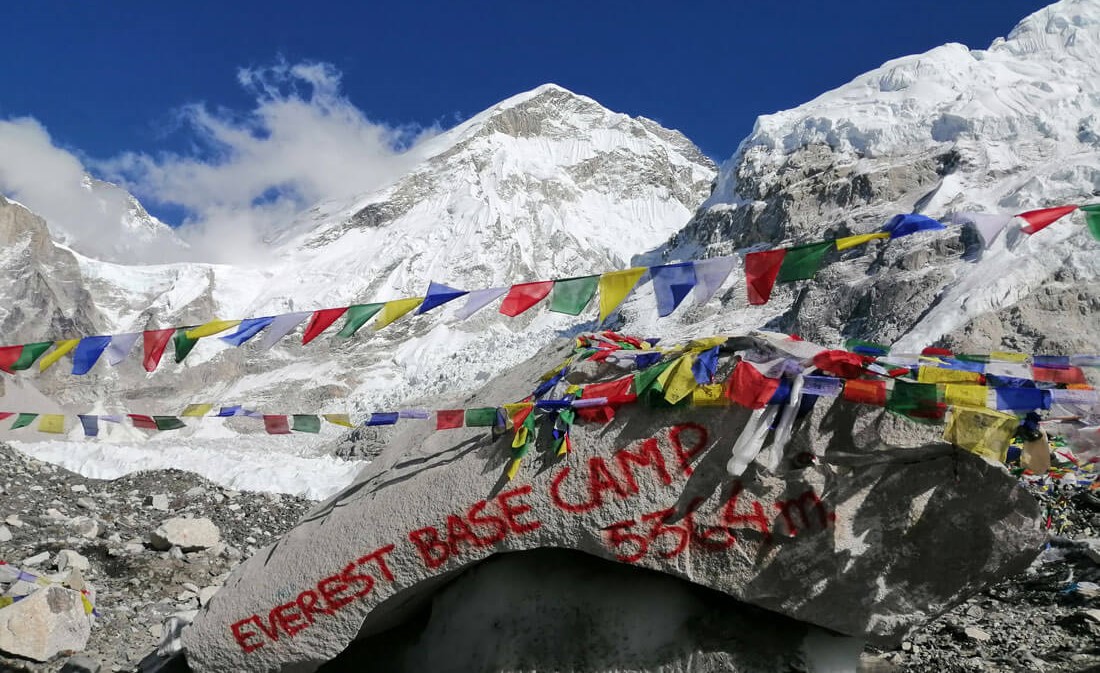
Early in the morning after breakfast, begin your trek from Lobuche (4,910m/16,105ft), following a trail that weaves through rugged glacial moraines and offers mesmerizing views of the Himalayan peaks and the Khumbu Glacier. After 3–4 hours of walking, you’ll reach Gorak Shep (5,164m/16,942ft), the last settlement before Everest Base Camp. After a short rest and lunch, continue your journey to the legendary Everest Base Camp (5,364m/17,598ft). Walking along the glacial terrain, you’ll be surrounded by towering peaks, including Mt. Everest, Nuptse, and Khumbutse. Take in the awe-inspiring views and capture unforgettable moments at the base of the world’s highest mountain. Return to Gorak Shep for an overnight stay.
Accommodation: Hotel/Teahouse/Lodge
Meals: Breakfast, Lunch and Dinner
Today; Begin your day early with a hike to Kala Patthar (5,545m/18,192ft), one of the best viewpoints in the Everest region. The ascent is steep but short, taking around 2 to 3 hours. From the top, you’ll be rewarded with panoramic views of Mt. Everest, Nuptse, Lhotse, and Ama Dablam, along with the surrounding Himalayan peaks bathed in the golden light of sunrise. After soaking in the breathtaking scenery, descend to Gorak Shep for breakfast. From there, continue your trek downhill through glacial valleys and alpine landscapes, passing through Lobuche and Thukla, before reaching Pheriche (4,240m/13,908ft) for an overnight stay.
Accommodation: Hotel/Teahouse/Lodge
Meals: Breakfast, Lunch and Dinner
Walking start your from Pheriche with a gradual descent along the Imja River, passing through beautiful alpine landscapes and Sherpa villages like Pangboche and Debuche. Cross suspension bridges over glacial rivers, enjoy the serene views of Ama Dablam and other Himalayan peaks. The trail continues through Tengboche, where you can take a short break to visit the famous Tengboche Monastery, before descending further to Phunki Thanga. From here, ascend through a pine forest and follow the trail leading back to the vibrant town of Namche Bazaar (3,440m/11,284ft). Overnight stay in Namche Bazaar.
Accommodation: Hotel/Teahouse/Lodge
Meals: Breakfast, Lunch and Dinner
Today your final day of trekking, descend from Namche Bazaar, following a trail that winds through dense forests of pine and rhododendron, and crosses several suspension bridges over the Dudh Koshi River. Pass through charming Sherpa villages like Jorsalle, Monjo, Phakding, and Chumoa, retracing on your steps back to Lukla. The walk is mostly downhill, but a few short ascents make it moderately challenging. Upon reaching Lukla, celebrate the completion of your 14 days Everest Base Camp trek with your trekking team. Overnight stay in Lukla.
Accommodation: Hotel/Teahouse/Lodge
Meals: Breakfast, Lunch and Dinner
After breakfast, you will take a scenic morning flight from Lukla to Kathmandu, which will be the end of your incredible 14-day Everest Base Camp trek. Enjoy the aerial view of the Himalayan peaks and lush valleys as you bid farewell to the Everest region. Upon arrival in Kathmandu, you will be transferred to your hotel, where you can relax or explore the city’s vibrant streets and markets. Reminisce about your unforgettable adventure in the Himalayas. Overnight in Kathmandu.
Accommodation: Hotel (Hotel Moonlight)
Meals: Breakfast
Thank you for joining us on this trek and it has been a pleasure getting to know you during this time. We hope this venture has enriched your experience with happy memories. You will be assisted in your last minute preparation. Our representative will take you to Tribhuvan International Airport three hours before your scheduled flight. Bon voyage for a safe and pleasant trip home. Safe Journey!! We hope to see you again.
Meals: Breakfast
Everest Base Camp Trek - 14-Days Cost Details
Cost Includes
- Twin-sharing accommodation in a 3-star hotel for 2 nights in Kathmandu including breakfast (Private room accommodation can be organized at an extra cost).
- Twin-sharing guesthouse accommodation during the trek for 11 nights with attached bathrooms in Lukla, Phakding & Namche.
- All your standard meals during the trek (11 Breakfasts, 11 Lunches and 11 Dinners) including a hot water, tea or coffee.
- Fresh seasonal fruits each day after dinner during the trek.
- Purified drinking water during the trek using Water Filter or water purification tablets.
- All (international and domestic) airport transfers on a tourist vehicle.
- Round-trip airfare between Kathmandu/Manthali and Lukla.
- All private ground transportation including airport transfers
- Sagarmatha National Park Permit Fees and Khumbu Pasang Lhamu Rural Municipality Entry Fee
- Experienced English speaking local trekking guide
- Assistant guide to client ratio for personalized attention and support
- 1 porter for every 2 trekkers: Porterage of your duffel bag (15kgs)
- Duffle bag for porter use (1 duffel bag per trekker)
- Comprehensive first aid kit with high altitude medicine
- Staffs salary, food, equipment, and insurance, included on-trip cost
- Official expense, all local and government tax and VAT.
- Sleeping bag if needed (it is refundable)
- A farewell dinner on the last night in Nepal.
Cost Excludes
- International flight tickets and Nepal entry visa fee
- Lunch and Dinner in Kathmandu during stay
- Disembarkation Airport Tax in Nepal - approx. US$ 24. al equipment
- Personal hiking equipment
- Personal expenses. Additional expenses due to unforeseen circumstances such as other events beyond control.
- Drinks except tea and coffee. (Bar Bill, laundry and telephone calls.)
- Travel Insurance: Liability of insurance against any kind of medical expenses etc.)
- Emergency rescue evacuation if needed
- Tips for treks guide and porter (it is appreciated)
14-Days Trip Cost Details
- The trip cost always depends on group size, hotel accommodation category and client’s desire budget
- The included itinerary is a guideline and standard pattern which AlpineTrav you. This trip itinerary can be modified according to your time and requirements
- The itinerary shall be changed after an understanding between both AlpineTrav and the client. Additional activities could be either added or reduced as per client’s request before the trip confirmation
- Price shall be adjusted in our mutual understanding, if the client intends to add some services we shall charge him/ her for those additional services and if he/she intends to lessen some services, we shall wave the charges accordingly
- The Everest Base Camp Trek itinerary has been published in 3-star hotel and tea house/lodge services for better understanding of the customers.
Please contact us on WhatsApp: +9779860751012 for any information about in your selected package.
Useful Info
Please take care to note: Every effort will be made to keep to the above itinerary; however, since this adventure entails traveling in remote mountainous regions, we cannot guarantee that we will not deviate from it. Weather, the health condition of a group member, unexpected natural disasters, etc., can all contribute to changes in the itinerary. The trek guide will try to ensure that the trip runs according to plan, but please be prepared to be flexible if required.
Accommodation during the trek
Comfortable Stays in Cities and on the Trail Your comfort is our priority, whether in the bustling city or the serene mountains: In Kathmandu: Stay at Hotel Moonlight or a similar hotel, offering modern amenities for a relaxing experience(Room Arrangement: are on a twin-sharing basis, and during the trek stay in teahouse/lodge, known for their warmth and hospitality.
Accommodation at during trek: Twin-sharing accommodation with private bathroom at Phakding, Namche Bazaar and Lukla – Then – Twin-sharing accommodation with shared bathroom at other places
Meals During the Trek
During the trek, meals are typically served in teahouses, offering a variety of Nepali and international dishes. Which you can enjoy authentic Nepalese food as well the more common international cuisine (Tibetan, Continental, Italian, Indian, etc.).
- Breakfast and Dinner (On OPEN/CHOICE Menu) Served at the teahouse where you will spend the night.
- Lunch: Provided en route to the next destination, offering flexibility to enjoy the day’s journey.
- Special Touch: Breakfasts are provided your stay in Kathmandu you will also enjoy a specially prepared farewell dinner to celebrate the end of the trek.
Typical day on during the trek
Daily wake up calls will be between 6.00 am to 7.00 am while on the trek. The wake-up time and breakfast time will be decided a night before during the briefing time. The time table for each day will entirely depend on your walking duration for that particular day.
After breakfast, you set off on the day’s walk. Before breakfast, you are required to pack your duffel bag as it will be loaded by the porter while you are having your breakfast. Then you few hrs walkimg and you will stop for lunch mid-day. The afternoon’s walk is generally shorter and you’ll usually arrive at your destination in time for afternoon tea.
What is the trekking distance from Lukla to the Everest Base Camp?
The Everest Base Camp trek kilometers and miles total approximately 65 km (40 miles) one way from Lukla to Base Camp. However, this distance can vary slightly depending on the specific itinerary and side trips trekkers choose. This is a standard Everest Base Camp trek follows the direct Lukla, Phakding, Namche, Tengboche, Dingboche, Lobuche, Gorak Shep and Base Camp route. Moreover, adding Gokyo Lakes, Cho La Pass, or Renjo La Pass can extend the total trekking distance to over 100 km (62 miles) one way.
Note: While the numbers seem moderate, the altitude gain and thin air above 4,000 meters make each kilometer feel much longer than it looks on paper.
How many hours do we walk each day on the Everest Base Camp trek?
The walking time each day on the Everest Base Camp trek ranges from 5 to 7 hours on average. Lower sections like Lukla to Phakding are easier (3–4 hours), while higher altitude days like Dingboche to Lobuche can take 6–7 hours due to thinner air and rough terrain. In total, expect around 60–70 hours of hiking from Lukla to Everest Base Camp and back.
How difficulty is the trek to Everest Base Camp?
The Everest Base Camp Trek is renowned yet challenging. The primary difficulties are altitude sickness and the trek’s length. Altitude sickness is unpredictable and affects anyone. Trekking entails 5-7 hours of daily walking, but with proper preparation and nutrition, you can manage well. To succeed in trekking, train your body for high altitudes, walking on hilly terrain with a backpack. Additionally, plan to walk an hour, 4-5 times weekly, from 2 months prior to trekking.
How much does the Everest Base Camp Trek Cost?
The cost of a Everest Base Camp trekking depends on the travel preferences and duration of the trek. Factors that affect these costs are accommodation, transportation, permits, guides, porters, and duration of the trek. So before purchasing the price, check the inclusions and exclusions section mentioned above. Our 18-day trek costs USD 1,780 per person, which is an all-inclusive cost. In addition, a group discount is also available for the trek, if you are in a larger group, feel free to contact us for trip cost and availability.
The cost covers lodging in Kathmandu and throughout the trek, meals, permits, domestic flights, a trekking guide, a porter, all ground transportation. This all-inclusive cost ensures trekkers are worry-free and only focus on the journey rather than the logistics.
What is the Elevation of Everest Base Camp?
Everest Base Camp, often referred to as Everest Base Camp or Mount Everest Base Camp, sits at an altitude of 5,364 meters (17,598 feet). Whether you’re looking up Everest Base Camp height, elevation, or altitude, this is the official measurement on the Nepal side. It’s a key milestone for trekkers and the starting point for climbers heading toward the summit.
Among such epic endeavors, the Everest Base Camp Trek stands out as a profoundly satisfying pilgrimage, a true once-in-a-lifetime achievement. Imagine leaving your mark, your own indelible footprint, at an astounding altitude of 5,364 meters (17,599 feet). Ascending beyond the five-thousand-meter threshold ushers you into a domain explored by a limited few.
How should I prepare for Everest Base Camp Trek?
Proper preparation is key for a successful Everest Base Camp trek, necessitating physical and mental readiness starting around two months in advance is highly recommended. Prioritize gradual progress, rest, and hydration to avoid strain. Along with weekly uphill hikes, gym workouts, and diverse cardio activities to enhance stamina and endurance. Similarly, balanced nutrition with complex carbs and protein is required to support increased calories need. Incorporate stretching and yoga for flexibility and stability. Therefore, mental preparation involves understanding challenges, setting realistic expectations, and practicing mindfulness.
How safe is it to embark on the Everest Base Camp trek?
Trekking to Everest Base Camp is generally considered safe for individuals who are in good health and eager to undertake the adventure. Based on our experiences, it’s important to note that high altitude presents a significant challenge during this trek, and altitude sickness can affect anyone. It is difficult to predict altitude sickness which can strike at any time. When you’re in the mountains, mental preparedness is just as important as physical fitness.
Therefore, regarding the trekking trails to Everest Base Camp, given its elevation of 5,364 meters above sea level, it’s expected that you will need to ascend high hills to reach your destination. However, the trail has been designed to be accessible to individuals with good physical health and determination.
Having said that, at AlpineTrav safety is our top priority. To ensure that, our certified guides are equipped with oximeters and first aid training and we provide one guide for small groups of up to 4 people and an associate guide for larger groups above them.
Along with that we tag 1 Porter for every 2 clients which have weight limits of 30 kg or 15 kg for each client. Not only that, but we be emphasize acclimatization to prevent altitude sickness. Furthermore, proper gear and optional oxygen support will also be available at an additional cost.
Important note: It’s important to acknowledge that the real danger during the trek is the unpredictable natural calamities and disasters beyond anyone’s control. It is strongly recommended to obtain travel insurance before starting your journey.
How to prevent altitude sickness during trek?
Altitude sickness poses a serious and potentially fatal risk, especially during the Everest Base Camp Trek. Prevention measures are crucial due to their unpredictability. Consulting medical experts beforehand for a physical exam and risk assessment is essential. Therefore, avoiding substances like alcohol and tobacco, while limiting caffeine, aids in acclimatization. Whereas, adhering to safe altitude gain rules, maintaining hydration, and a carb-rich diet is a key factor while trekking.
Likewise, gradual acclimatization through slow ascents and hiring experienced guides are highly recommended. When you recognize symptoms such as nausea and dizziness and immediately decide to descend to a lower altitude or rest or go on a trek, which is a guide will immediately make decisions and advise according to your situation. For such cases carrying altitude sickness medications, a first aid kit, and testing local remedies are prudent precautions. For more inform navigate in detail the vital aspects through our blog about Altitude Sickness Prevention.
What is the best time for Everest Base Camp Trekking?
The best seasons time to trek to the EBC are Autumn (latter half of September till December) and Spring (latter half of March until mid-May). On both seasons, Mornings are usually clear, with clouds building up in the afternoon and disappearing at night. The given temperature may raise or lower with the change in weather factors: (Sunny, Snow, Rain etc.): Here are the weather and temperatures Everest Base Camp faces during the Spring and Autumn months:
- Spring (March-May): Daytime temperatures in the spring range from 5°C to 10°C. (41°F to 50°F). With a possible -10°C drop at night or lower.
- Summer (June–August): Daytime highs are between 10°C and. Even at night, temperatures can drop to 15°C (50°F to 59°F). A chance for temperatures to fall below freezing.
- Autumn (September-November): Daytime highs and lows varied. 10°C to 20°C (50°F to 68°F), but it can get cold at night. Frigid, possibly falling to -10°C or lower.
- Winter (December–February): The average daytime temperature is five degrees Celsius. At night, the temperature can drop to -10°C, while during the day, it can reach 12°C (41°F to 54°F) between 14°F and 23°F or 5°C. In severe cold, temperatures can drop to -10, nighttime temperatures of 20°C to -30°C (-4°F to -22°F).
Overall, spring and autumn stand out for their pleasant conditions, while the monsoon and winter offer unique experiences with challenges to overcome.
Detail information about flying into Lukla
Lukla Airport, also called Tenzing Hillary Airport, is one of the world’s most dangerous airports at 2,840 meters high serving as the entry and exit point for Everest region treks via flight. However, there are some operational changes involving flights from Ramechhap/Manthali airport at times.
Lukla flight from Ramechhap/Manthali Airport
Ramechhap/Manthali Airport is in Nepal’s Terai region, about a 5 to 6-hour drive from Kathmandu from there you’ll have a 20-minute flight to Lukla. In peak months such as March, April, May, October, and November, Lukla flights are redirected to Ramechhap/Manthali (474 m) due to increased air traffic.
Lukla flight from Kathmandu Airport
Similarly, in months like January, February, June, July, August, September, and December, Lukla flights originate from Kathmandu, which will take you about 35 minutes to reach Lukla. However, it is important to understand that the decision regarding the operation of Lukla flights is entirely up to the airlines and is influenced by the number of travelers each month.
Therefore, factors like unfavorable weather, airport congestion, runway issues, and geographical challenges often lead to flight delays or cancellations to Lukla. To account for this, it’s recommended to add an extra day or two to your Everest Trekking plan. This buffer time can be valuable in case of flight disruptions, ensuring you catch your scheduled international flight back home.
More inform about Lukla flight →
FAQs Related to Everest Base Camp Trek
The Everest Base Camp trek is a world-famous and quite challenging Himalayan trek that takes travelers to the base camp of Mount Everest, the world’s tallest mountain. It is a multi-day adventure via the Khumbu Valley of Nepal.
Everest Base Camp is located at the base of the world’s highest peak in the Khumbu Valley of Nepal. It lies within the Sagarmatha National Park at an elevation of 5,364 meters (17,598 feet). Additionally, the base camp is in the Solukhumbu District, which is part of Koshi Province.
In general, the Everest Base Camp trek takes 14 days to complete. However, the itinerary is customizable, and trekkers can customize it according to their time and preferences. Thus, even though the trek can be completed within 2 weeks, trekkers can shorten or extend the trip according to their time availability.
The Sagarmatha National Park Entry Permit and a Khumbu Pasang Lhamu Rural Municipality Entry Permit are two essential permits required for the Everest Base Camp Trek. Still, if you are trekking from Jiri, you need a Gaurishankhar Conservation Area Permit.
The classic Jiri to Everest Base Camp route is longer, less crowded, and more authentic than the standard Lukla to Everest Base Camp Trek. The Jiri to Everest Base Camp trek begins with a drive from Kathmandu to Phaplu, whereas the standard Everest Base Camp starts with a flight to Lukla. Moreover, the Jiri to Everest Base Camp takes 19 to 22 days to complete, and the standard one takes 14 to 16 days, making it ideal for trekkers with limited time.
The Everest Base Camp trek route teahouses are the same as those at other trekking destinations. They are simple, basic, built from stone and wood, and comfortable for overnight stays. Similarly, the tea houses have shared dining areas and bathrooms, and rooms often feature twin beds and blankets for a cozy experience.
Everest Base Camp is a renowned trekking destination because it takes trekkers to the base camp of Mount Everest, the world’s highest peak. Additionally, its breathtaking Himalayan landscapes, close-up view of Mount Everest, diverse landscapes, diverse biodiversity, iconic trail with historical significance, and the offer of a real sense of adventure make it world-renowned.
For the Everest Base Camp trek, we recommend keeping your total baggage weight around 15 kg (33 lbs), including your backpack. Ideally, your duffel bag should weigh between 10-12 kg, and your personal backpack should be around 3-5 kg. The duffel bag will be carried by a porter, while you’ll be responsible for your personal backpack. The baggage allowance on the flight is also 15 kg.
Wise packing is crucial to making the journey successful in the higher Himalayas. We usually advise trekkers to pack lightly but not to miss any essential equipment for every circumstance. We have listed below for the Everest Base Camp Trek:
For Body:
- Trekking long-sleeve top
- Waterproof pants and jackets
- Rapid-dry cotton pants and a Wool top
- Some undergarments
- Fleece pullovers and rain-proof hoodies
For Head and Face:
- Knit hat, wide-brimmed hat, and shawl
- Battery-powered headlight with spares
- Sunscreen and sunglasses for protection from harmful UV rays
- Wipes for body and face
For Hands and footwear:
- Flexible grip gloves
- Pair of thermal gloves
- Supportive, lightweight outdoor boots
- Several pairs of thick knitted socks
Toiletries:
- Medium bath towel
- Dental brush and paste
Other Essential gear and things
- Whether you are employing a porter or not, you may choose to use a daypack or a backpack
- Reusable bottle
- Water purification
- Sleeping bag
- Some Nepalese currency
- Watch and cell phone
- First aid kit and camera
- Passport photocopies and additional passport-size images
Yes! The adventurous Everest Base Camp trek always relies on the weather conditions. Sometimes a flight gets postponed or even canceled due to unpredictable weather changes at frequent intervals. Kathmandu to Lukla is a 30-minute flight that lands at 2,840 meters / 9,318 feet airstrip at Tenzing Hillary Airport. Please be prepared accordingly with a few contingency days in case of cancelation of the domestic flights to and from Lukla.
Map

 Nepal
Nepal