Trip Info
-
Min 2 Max 12
-
Grade: Moderate
-
Sept-Nov, Mar-May
-
Max. 4,100m/13,451ft.
-
Duration: 11 Days
-
Private Vehicle (Jeep)
-
Hotel/ Teahouse/ Tent
-
All meals are included
<strong>Who we are</strong> Our website address is: <a href="http://www.alpinetrav.com" target="_new" rel="noopener">http://www.alpinetrav.com</a>. <hr /> <strong>What personal data we collect and why we collect it</strong> <h3>Plugin Data Collection and Compliance</h3> This website uses plugins that may store personal information. These plugins comply with GDPR regulations and are designed to manage and protect your data securely. Below are details on what data may be collected and why: <ol> <li><strong>Contact Forms</strong> <ul> <li>When you use contact forms, the plugin may collect your name, email, and other necessary details to provide responses to your inquiries.</li> <li>This data is stored to enable us to respond to your messages effectively and is retained only as long as necessary for communication.</li> </ul> </li> <li><strong>Comments and Spam Detection</strong> <ul> <li>Comments on the site collect data shown in the form, as well as the visitor’s IP address and browser user agent string to assist in spam detection.</li> <li>This data may also be shared with an automated spam detection service.</li> </ul> </li> <li><strong>Cookies and Data Storage</strong> <ul> <li>Some plugins may set cookies to improve user experience, such as storing login information or remembering preferences. These cookies comply with GDPR standards and expire after a set period or upon logging out.</li> <li>Cookies specifically used by these plugins do not collect personal data unless explicitly mentioned.</li> </ul> </li> <li><strong>Embedded Content</strong> <ul> <li>Embedded content from third-party websites may behave as if the visitor has visited those external websites. These third-party sites might collect data and track your interaction as per their policies.</li> </ul> </li> <li><strong>Analytics</strong> <ul> <li>Some plugins may collect anonymous analytics to improve site performance. However, no personal information is stored unless explicitly noted, and all data complies with GDPR standards.</li> </ul> </li> </ol> <h3>How Long We Retain Your Data</h3> The collected data is stored only as long as necessary for the intended purposes, such as for communication or to improve the site experience. This may vary based on the plugin and specific regulatory requirements. <h3>What Rights You Have Over Your Data</h3> Under GDPR, you have the right to: <ul> <li>Access: Request a copy of the personal data we hold.</li> <li>Rectification: Correct any data we hold about you that is incorrect.</li> <li>Erasure: Request the deletion of your data, provided it is no longer necessary for regulatory or operational purposes.</li> </ul> For requests, please contact us using the information in our Contact section below. <hr /> <strong>Where We Send Your Data</strong> Visitor comments may be checked through an automated spam detection service. Some plugins may also send anonymized data to third parties as part of analytics or performance monitoring. <strong>How We Protect Your Data</strong> All data managed by this website and its plugins is stored securely. We ensure our plugins meet industry standards for encryption and data protection. We also regularly update our website to prevent unauthorized access.
Panch Pokhari Lakes Trek Highlights
- Adventurous hikes towards the remote and less tourist destination of Nepal.
- Mesmerizing Views of the Five holy lakes (Panch Pokhari).
- Fantastic views of the mountains and landscapes during the hike.
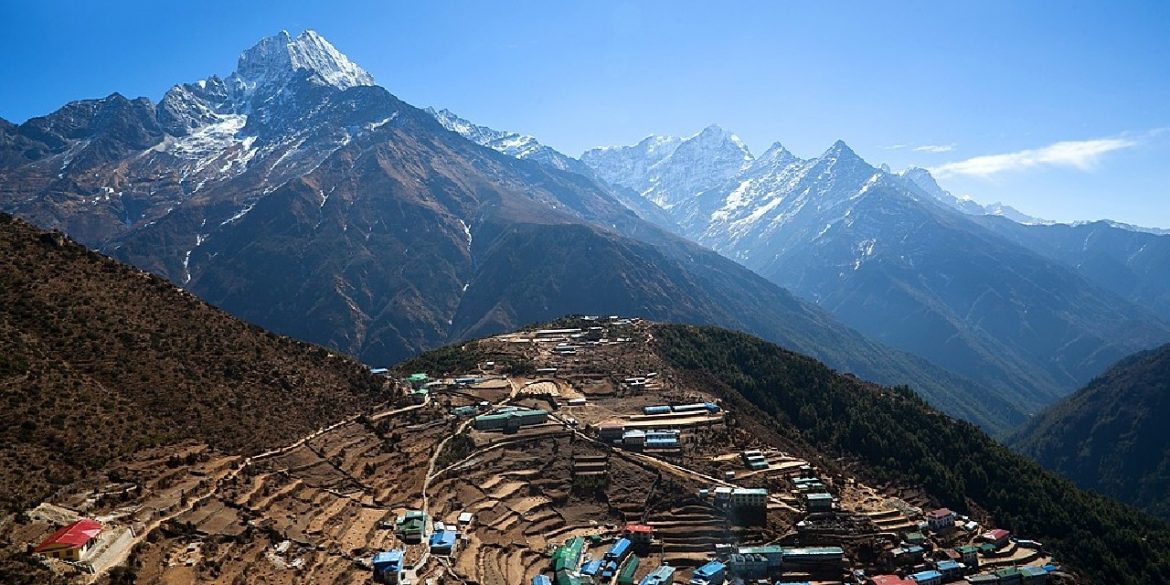
- Views of Dorje Lakpa, Phurbi Chhyachu, Madiya, Jugal Himal, Rolwaling and Langtang Range
- Rhododendron, Oak, and Juniper forest
- Ethnic Culture and Lifestyle
Panch Pokhari Trekking is one of the newly opened trekking routes in Nepal that includes a sacred and pristine group of five glacial lakes, Panch Pokhari, seated on the base of Jugal Himal. Panch Pokhari is a sacred pilgrimage site for Hindus and Buddhists and is located in the wild nature in the north-east region of Sindhupalchowk district. The lake is situated at the altitude of 4010m in a beautiful natural setting surrounded by the various Himalayas. Panch Pokhari Trekking is an easy and short trekking for someone with limited time but with a desire to be near the Himalayas.
The short trek to Panch Pokhari starts with your arrival in Kathmandu. After the day of arrival, the trip continues with a drive to Simpal, the starting point of the trek. The trekking trail passes through various settlements of Sherpa and Tamang communities, which gives trekkers an opportunity to understand the Himalayan culture and lifestyle. The trail comes across the beautiful landscape, waterfalls, alpine forest, temples, and many more. The trek also offers a stunning view of Dorje Lakpa (6966m), Phurbi Chhyachu (6637m), Madiya (6257m), Rolwaling Himal range, Ganesh Himal range, and Langtang Himal range. Panch Pokhari, being a group of holy lakes, is visited by thousands of visitors during Janai Purnima festival held in August. People from all over the country come to change their sacred thread known as Janai. People take a dip in the pond before changing or wearing their sacred thread. You can visit the two pilgrim houses near the pond and the temple dedicated to Lord Shiva, when in the Panch Pokhari vicinity. Even in an unclear weather, the trail throughout Panch Pokhari Trek is mystical and tranquil hence allowing you to replenish yourself with purity and composure.
Customize Your Panch Pokhari Trek:
- This is a general itinerary, which can always individually be “tailormade”. The Panch Pokhari trek package can be redesigned or redeveloped as per your taste, For more information please contact us.
10-Days Panch Pokhari Trek Itinerary
We recommend that you schedule your arrival in Kathmandu in the morning or afternoon. This will give you enough time to relax and recover from jet lag before starting your adventure. Upon arrival at Kathmandu International Airport, our representative will meet you at the airport and transfer you to your hotel where you will be served welcome drinks. After you have freshened up, your trek guide will brief you about your trip in the lobby of your hotel in the evening.
Get familiar with your surroundings by taking a walk down the street. Visit to Thamel, the main tourist hub. Overnight at Kathmandu's in a Hotel.
Accommodation: Hotel Moonlight
You'll take a drive to the small village of Simpal relishing the countryside view throughout the ride. On your way to Simpal, you will pass through Chautara, the headquarters of Sindhupalchowk district. As you drive further, alongside different rivers and streams, the settlement starts to get sparse and green hills to dominate the landscape. The drive to Simpal is only going to add thrill to the already excited you. Stay overnight at in Simpal.
Accommodation: Fully Camping
Meals: Breakfast, Lunch and Dinner
Today you'll begin your first day of trek gradually ascending to Sano Okhareni. You will then continue to trek on a steep trail through the densely forested path. You may also encounter some wild animals like mountain deer, langur monkeys and various species of birds. Crossing several smaller settlements on the way, you reach Kami Kharka for your overnight stay. Overnight at tented camp in Kami Kharka.
Accommodation: Fully Camping
Meals: Breakfast, Lunch and Dinner
Today you walk through the flat trail at first then enter the forested path filled with rhododendron, oaks, pine, and juniper trees. After about 5 to 6 hours of walk through the forest area, you get the sight of nomad's houses for cattle on your way to Pauwa Bas. Walking through the silent and tranquil forest, you'll arrive in Pauwa Bas. Overnight at tented camp in Pauwa Bas.
Accommodation: Fully Camping
Meals: Breakfast, Lunch and Dinner
Leaving Pauwa Bas behind, you'll ascend through a steep trail for about 3 hours. You then steeply descend for about one and a half hours through the forested trail. It is a quiet walk through an uninhabited area. Relishing the amazing view of mountains on your way, you'll arrive in Hile Bhanjyang. Overnight at tented camp in Hile Bhanjyang.
Accommodation: Fully Camping
Meals: Breakfast, Lunch and Dinner
After breakfast, you'll start to trek towards Panch Pokhari which is only about 4 hours of walking. You will first ascend through steep trail then gently descend through the forested trail to Nasyampati from where you get an amazing mountain view. You then continue to climb up through rocky hills to finally arrive in Panch Pokhari. The holy lakes of Panch Pokhari do not only serve as a pilgrimage site of the Hindu and Buddhist devotees but are equally beautiful scenically. The temple in Panch Pokhari is dedicated to Lord Shiva. Overnight at tented camp in Panch Pokhari.
Accommodation: Fully Camping
Meals: Breakfast, Lunch and Dinner
Today, you will start early morning to catch the sun rising against the Himalayas. Then you'll hike to the top of Panch Pokhari for a panoramic view of Dorje Lakpa (6966m), Gaurishankar (7134m), Jugal Himal Range, Ganesh Himal Range, Rolwaling Himal Range, and Langtang Himal Range. After spending some quality time, you will return back to Panch Pokhari and head towards Tupi Danda through steep trails. Overnight at tented camp in Tupi Danda.
Accommodation: Fully Camping
Meals: Breakfast, Lunch and Dinner
Leaving behind Tupi Danda, you steeply descend for some time, and the rest of the trail is quite leveled as you'll walk through terraced farm fields to reach the village of Dhap. Dhap is a beautiful village inhabited by Tamang community. Overnight at tented camp in Dhap.
Accommodation: Full Camping
Meals: Breakfast, Lunch and Dinner
After walking through terraced fields, along the Indrawati River, passing several beautiful typical settlements, you will reach Melamchi Bazaar. Melamchi Bazaar is very popular among the people of Kathmandu as well because of the water supply from Melamchi to the Kathmandu project which has been very much helpful to tackle the scarcity of water in the valley. Also, the hydroelectricity project is equally significant in this area. You will stay overnight at Melamchi Bazaar.
Accommodation: Fully Camping
Meals: Breakfast. Lunch and Dinner
Today, You shall head towards Kathmandu marking the end of this enriching and adventurous trekking experience. Through the terraced fields and lush landscapes, rolling hills, and rural settlements you shall reach Kathmandu. After arriving in Kathmandu, you can go for souvenir shopping and walk around nearby places of interest. Stay overnight in Kathmandu.
Accommodation: Hotel Moonlight
Meals: Breakfast, Lunch
Your adventure in Nepal comes to an end today! A AlpineTrav Treks representative will take you to the airport approximately three hours before your scheduled flight. On your way home, you have plenty of time to plan your next adventure in the wonderful country of Nepal. Please do not hesitate to let us know if you would like to extend your stay. Kindly contact us for more details on extensions.
Meals: Breakfast
Panch Pokhari Trek 10-Days Cost Details
Cost Includes
- On the trekking route: Full camping setup (kitchen tent, dining tent, toilet tent, table, chairs, and more for your comfort.
- Twin-sharing accommodation at Hotel in Kathmandu for 2 nights
- All guide, cook, Sherpa, and porter expenses, including meals, transportation, tent camping accommodations.
- All private ground transportation including airport transfers
- Freshly prepared meals (B, L, D) with boiled water, tea, coffee etc.
- Twin sharing tent for accommodation during the trek.
- Experienced local trek guide with 1:4 assistant guide to client ratio
- Full support camping crew with number of porters to carry load equipment.
- All camping logistical arrangements for your comfort
- All required permits for the trek
- Duffle bag for porter use (1 duffel bag per trekker)
- Comprehensive first aid kit with high altitude medicine
- Trekking Area Map, and Water Purifications Tablet
- Staffs salary, food, equipment, and insurance, included on-trip cost
- Official expense, all local and government tax and VAT.
- Sleeping bag if needed (it is refundable)
- Farewell celebratory dinner in Kathmandu with trek team
Cost Excludes
- International flight tickets and Nepal entry visa fee
- Lunch and Dinner in Kathmandu during stay
- Disembarkation Airport Tax in Nepal - approx. US$ 24. al equipment
- Personal hiking equipment
- Personal expenses. Additional expenses due to unforeseen circumstances such as other events beyond control.
- Drinks except tea and coffee. (Bar Bill, laundry and telephone calls.)
- Travel Insurance: Liability of insurance against any kind of medical expenses etc.)
- Emergency rescue evacuation if needed
- Tips for treks guide and porter (it is appreciated)
10-Days Trip Cost Details
- The trip cost always depends on group size, hotel accommodation category and client’s desire budget
- The included itinerary is a guideline and standard pattern which AlpineTrav you. This trip itinerary can be modified according to your time and requirements
- The itinerary shall be changed after an understanding between both AlpineTrav and the client. Additional activities could be either added or reduced as per client’s request before the trip confirmation
- Price shall be adjusted in our mutual understanding, if the client intends to add some services we shall charge him/ her for those additional services and if he/she intends to lessen some services, we shall wave the charges accordingly
- The Panch Pokhari Trek itinerary has been published in 3-star hotel and tea house/lodge services for better understanding of the customers.
Please contact us on WhatsApp: +9779860751012 for any information about in your selected package.
Useful Info
Please take care to note: Every effort will be made to keep to the above itinerary; however, since this adventure entails traveling in remote mountainous regions, we cannot guarantee that we will not deviate from it. Weather, the health condition of a group member, unexpected natural disasters, etc., can all contribute to changes in the itinerary. The trek guide will try to ensure that the trip runs according to plan, but please be prepared to be flexible if required.
Meals at Langtang Region, Panch Pokhari Trek
All meals are included during the trekking period. We will provide three meals a day (B,L,D) during the trek. Since this is a full camping trek, our kitchen crew will serve freshly prepared meals during the trek. We consider hearty and delicious meals as a key component to the overall success of our trip.
Accommodations at Langtang Region Panch Pokhara Trek
In Kathmandu, we manage a three-star hotel offering a bed and breakfast plan on a twin-sharing basis. We can also manage a single room upon your request, but at an extra cost. Likewise, if you prefer more luxurious accommodations, it is also possible, but it costs more. Yet, due to the remote location and the lack of facilities at teahouses or lodges along the trek, trekkers must stay in a tented camp throughout the expedition.
Trekking: Camping: Your accommodation during the trekking period will be fully tented camping. A tent will be provided for every 2 travellers with a foam mattress. In the case of a single, we will arrange a single tent for you by default at no additional cost. There will also be a kitchen tent, dining tent, toilet tent, table, chairs, and more for your comfort. Our trekking team will carry all of the tent equipment for your worry-free and easy journey.
How difficult is the Panch Pokhari Trek?
Panch Pokhari trek is a moderate trek, i.e. not so easy and not so hard. The highest point of this trek is Panch Pokhari (4,100m) itself. The altitude gain is not straight up rather it ascends slowly, which means there are low chances of altitude sickness. There are some steep climbs to make in the Panch Pokhari trekking itinerary. If you possess an average level of fitness, this can be an easy cup of tea for you. Prior trekking experience is a plus factor for this trek.
If not so experienced, you can do some cardio and hiking training several months prior to the trek date. These training will boost your pain endurance level and mentality, which are the prominent factors for any trek. Hill hiking, Gim, Running, Swimming, Jogging and Cycling are the possible workouts for the Panch Pokhari trek preparation.
Do I need previous experience to do Panch Pokhari Trek?
No previous trekking experience is required to participate in Panch Pokhari Trek, but trekkers should be moderately fit, enjoy walking, and adapt to high-altitude conditions. Trekkers who are okay with long trekking hours for longer days don’t require previous trekking experience for the trek. Likewise, those with good physical fitness, stamina, and mental resilience can smoothly complete the trek without prior trekking experience. Still, a prior trekking experience is a bonus point for a journey like Panch Pokhari.
What is the best time for Panch Pokhari Trek?
Just like most Nepal treks, Panch Pokhari trek is also suitable during the Autumn and Spring season. Autumn is the unbeatable travel season for Panch Pokhari trek. September, October, and November are the months of Autumn season. These months provide friendly conditions to travel; clear blue skies, green surrounding, unobstructed mountain views, ideal temperature are the perks of Autumn season.
Similarly, Spring is also the most favourable time to do Panch Pokhari trek. March, April, and May are the months of the travel-friendly Spring season. Spring is a time of blossoming where everything changes its colour and shape. Clear weather, no or little rain, average temperature, clear climatic conditions are the advantages of the Spring season.
On the contrary, Winter and Monsoon/Summer seasons are the two least-favourable times for the Panch Pokhari trek. December, January, and February are the months of the Winter season in Nepal. Winter is the coldest season of all and trekking during the season is adventurous but difficult. Snow-decorated terrain views and empty trekking routes are the perks of the Winter season.
With the proper equipment, pre-plan, and trekking guidance the Panch Pokhari trek during winter is possible. The early months and late months of the Winter season are the easiest and less difficult if you are opting for the Winter season.
Likewise, Monsoon/summer season is the least-picked time for Panch Pokhari trek. June, July and August are the months of Summer season in Nepal. All thanks to the periodic rainfalls and overcast conditions. The trails are quite slippery and muddy during monsoon season. It doesn’t mean that Panch Pokhari trek is impossible during Monsoon season. If you are equipped with right gears and guided by the experienced guides, Panch Pokhari in Monsoon is a ready deal.
If you want to do Panch Pokhari trek in Summer, i.e. Monsoon season, pack the bag in either early or late summer months. These days receive fewer rainfalls than the middle month days.
What should I pack for Panch Pokhari trekking?
The following information will give you some ideas on what to bring for a hike. It is important not to forget the essential items, as this will determine your comfort and safety on the hike. Equally important is that you do not burden yourself with unnecessary equipment on the hike. That is why we have listed some below.
General
- All season sleeping bag and down Jacket
- Duffle bag
- A wind and waterproof thin layered jacket
- Daypack
Upper Body- Head / Ears / Eyewear
- A pair of half gloves
- A warmer hat that covers the ears
- Sunglasses
- Neckwarmer
- Sunscreen (35 to 60 SPF)
- Headlamp and an extra set of batteries
Hands
- A pair of half gloves for walking poles(if you prefer)
- Warmer shell gloves and liner
Upper Body
- long sleeve t-shirts
- Thermal tops
- wool jacket or pullover
- Sports bras for women and girls
- Water and windproof shell jacket
Lower Body
- Thermal underwear (especially trousers)
- windproof and waterproof trousers
- warmer trousers
- Comfortable trekking pants
- Extra casual sport pants
Footwear
- A pair of good waterproof trekking boots
- Pair of sandals
- 4-5 pairs of woolen socks
- Sock liners
- Light shoes and sneakers
- First Aid Kits and Medicines
- Assorted adhesive bandages (fabric preferred)
- Blister treatment cream or similar
- Insect / anti-itch ointment
- Ibuprofen or other pain-relief medication
- Diamox (125mg to 250mg tablets for altitude sickness)
- Warps, splints, and wound coverings butterfly bandage
- Water purifying pills
(Note that our guide will carry medicine and first aid kit during the trek. However, we recommend that you bring your own personal first aid kit as well)
Miscellaneous – but must useful on the trek
- 4 passport size photos with original passport
- Water bottle & filter
- Flight details
- Bathroom kit (conform, should be included toilet paper, plastic bags, hand wipes, towel, and soap, etc.)
Extra things
- Comfortable trekking poles
- Quality energy dry foods (up to you)
- Power bank and music players
- Camera (memory card, chargers, and extra batteries)
 Nepal
Nepal