Trip info
-
Grade: Easy+Light
-
Duration: 1 Days
-
Private A/C Vehicle
Kathmandu Valley Day Tour Highlights
- Bouddhanath Stupa
- Pashupatinath Temple
- Monkey Temple
- Kathmandu Durbar Square
Kathmandu is the capital city of Nepal and is the gateway to all parts of the Nepal Himalayas, surrounded by four mountains – Phulchowki, Chandragiri, Shivpuri and Nagarjuna. The three major cities of the Kathmandu Valley are Bhaktapur, Patan and Kathmandu. Situated at an altitude of 4,500 feet above sea level, Kathmandu is home to seven UNESCO World Heritage Sites. Kathmandu Durbar Square, Bhaktapur Durbar Square, Patan Durbar Square, Pashupatinath Temple, Chagu Narayan Temple, Swayambhunath Stupa and Boudhanath Stupa. Other popular sites include Ranipokhari, Dhara Dhara, Sundhara, Ghantaghar, Singadurbar and Budhanilkantha. Kalanki, Sundarijal, Balaju Park, Chobhar and Shivpuri Nagarjuna National Park are some of the major gateways to Kathmandu. In the 18th century, before the unification of Nepal, these major cities were independent kingdoms ruled by the Malla kings.
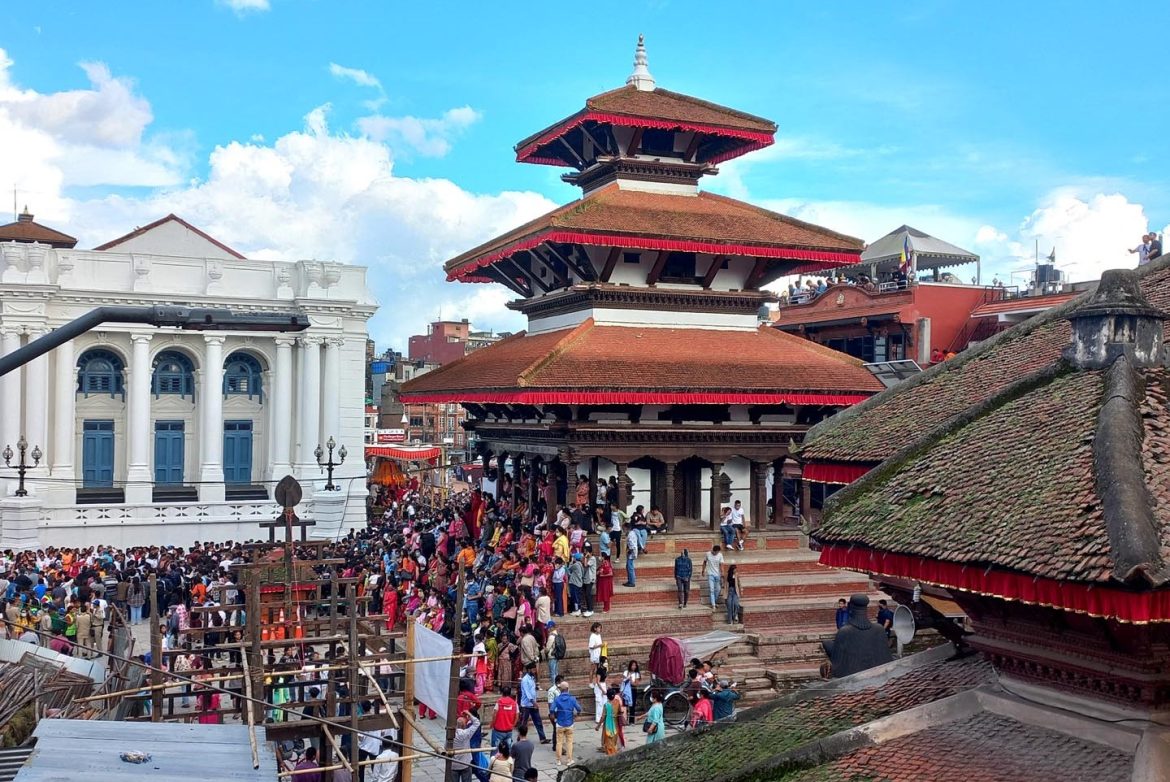
Kathmandu Durbar Square:
Kathmandu Durbar Square is the ancient seat of the Malla rulers of Kathmandu Valley. This palace is a combination of several temples and monuments that reflect the archaeological significance and cultural richness prevalent during the time of the Malla rulers.
Some of the attractions of Kathmandu Durbar Square are the nine-storeyed site, Kashtamandap Temple, Kumari Ghar, Kaal Bhairav and the museum inside the palace.
Pashupatinath Temple:
Pashupatinath Temple is located in Kathmandu and is the largest temple complex in South Asia. This temple is a supreme pilgrimage site for Hindus from all over the world. As a result, the area is always crowded with Hindus from different parts of the country as well as from India.
Situated on the banks of the holy Bagmati River, the two-storeyed pagoda temple of Pashupatinath houses a five-faced idol of Lord Shiva. Apart from the main temple, there are numerous temples dedicated to various gods and goddesses in and around the Pashupatinath temple area.
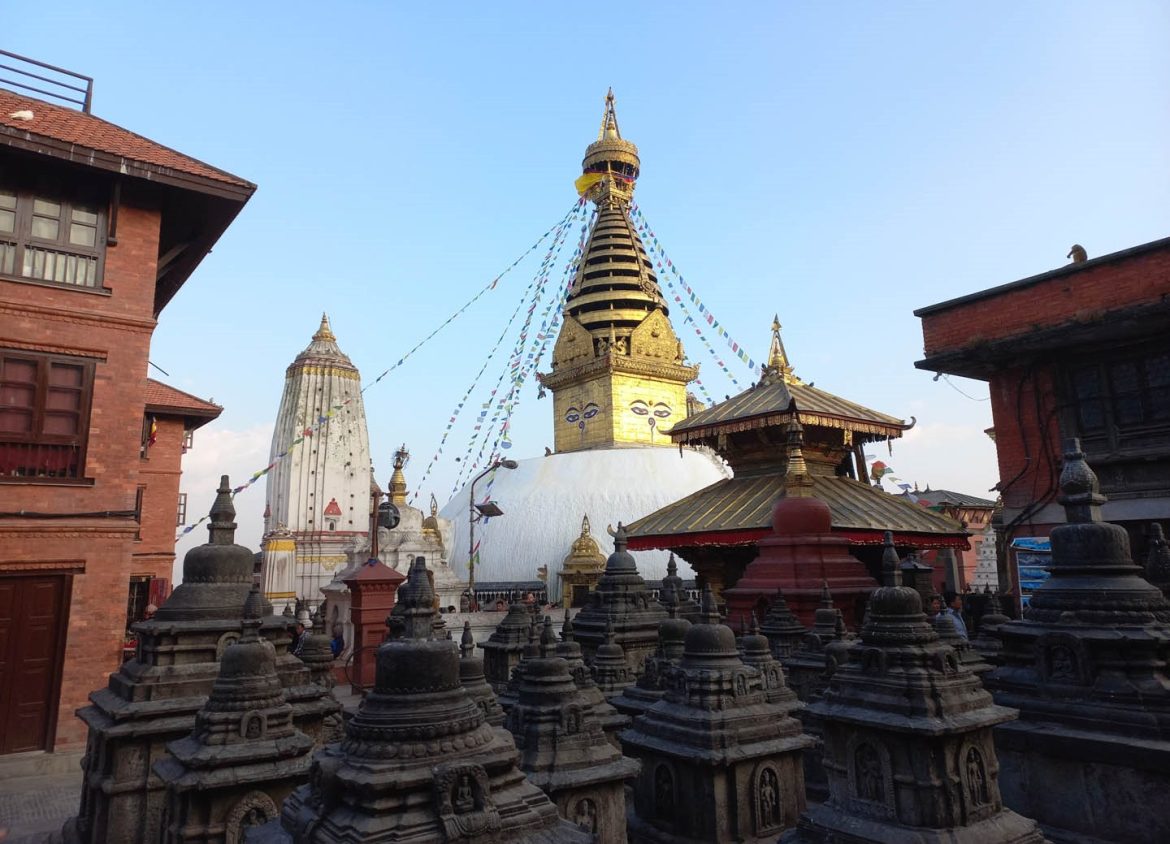
Swayambhunath Stupa
Historians believe that the history of Swayambhunath Stupa is as old as the history of Kathmandu Valley. It is said that Swayambhunath Stupa was submerged under water when the entire Kathmandu Valley was a large lake.
According to the Swayambhu Purana, after Manjushri cut a canal and drained the lake water, a stupa was built around a lotus that emitted a bright light. There are numerous monasteries in and around the Swayambhunath Stupa area. The area is a landmark of Kathmandu Valley as it offers a great view of Kathmandu Valley.
Boudhanath Stupa:
The Great Stupa of Boudhanath is one of the largest stupas in all of South Asia. Located in Boudhanath, a short drive from the city center, the white mound rises 36 meters above the ground. Boudhanath is believed to have been built in the 5th century.
There are many monasteries around the stupa as the area is inhabited by people who believe in Buddhism. Typically, Buddhist monks dressed in maroon robes are seen circling the stupa with prayer wheels in their hands. Several smaller stupas are located at the base.
Buddhanilkantha Temple:
The most mysterious statue of the Hindu god Vishnu, the Budhanilkantha statue, is located 10 km from the center of Kathmandu. It is located at the foot of the Shivapuri hills and is the largest and most beautiful stone carving in all of Nepal. It is also the most mysterious.
Carved from a single block of black basalt stone of unknown origin, the Budhanilkantha statue is 5 meters tall and is reclined inside a water tank that also represents the 13-meter-long cosmic ocean.
Also known as the Sleeping Vishnu, or Jalakshayan Narayana, this statue depicts the deity reclining on the coiled coils of the cosmic serpent Shrestha, who is the eternal, multifaceted king of the serpent gods known as Nagas, and is also a servant of Lord Vishnu.
With crossed legs and eleven heads of the remaining ones holding her head, Vishnu’s four hands hold objects symbolic of his divine qualities: the chakra, the conch-shell representing the mind; the four elements, the lotus flower; the dynamic universe and the mace; primordial knowledge.
A large number of pilgrims visit Budhanilkantha during Haribandhini Ekadashi, which falls on the 11th day of the month of Kartik (October–November). This is the main festival of the year in celebration of the awakening of Lord Vishnu from his long slumber.
 Nepal
Nepal